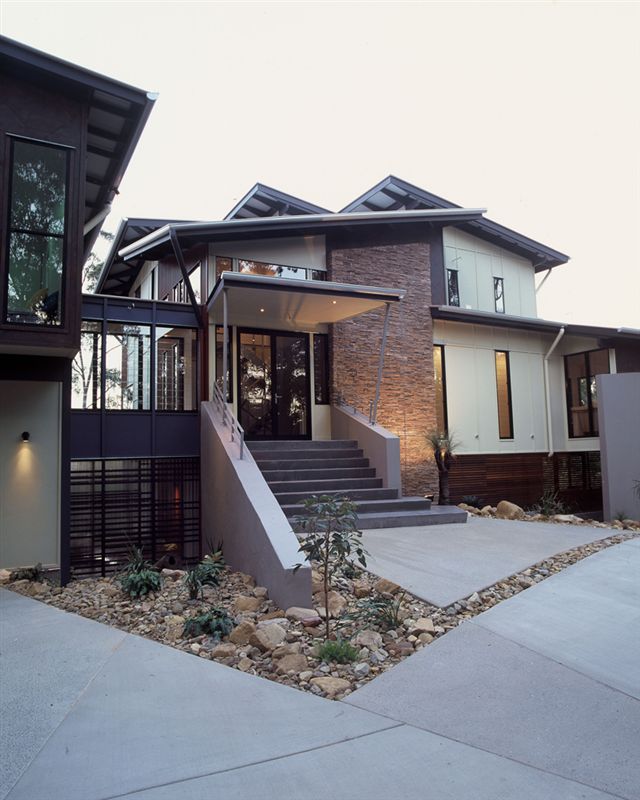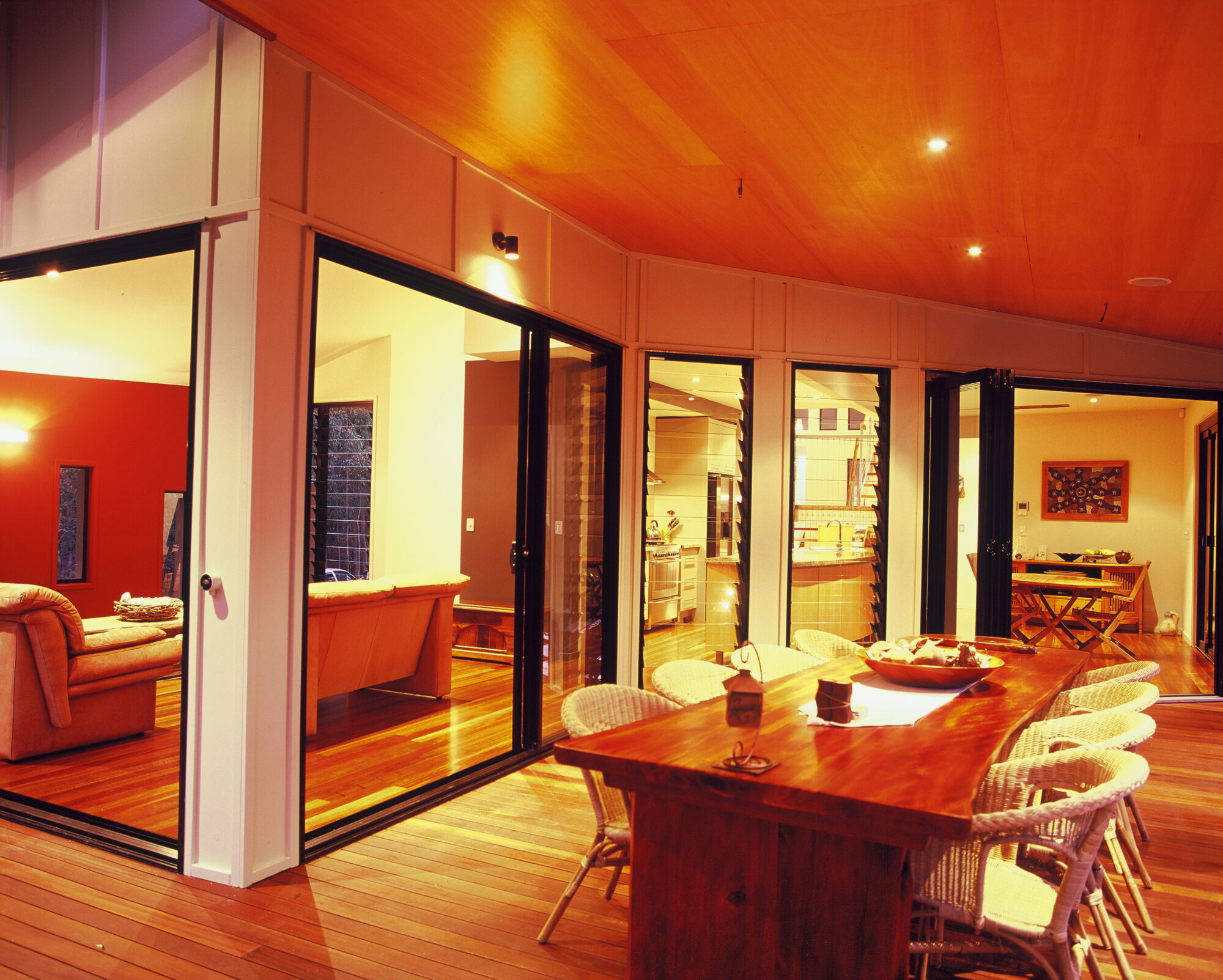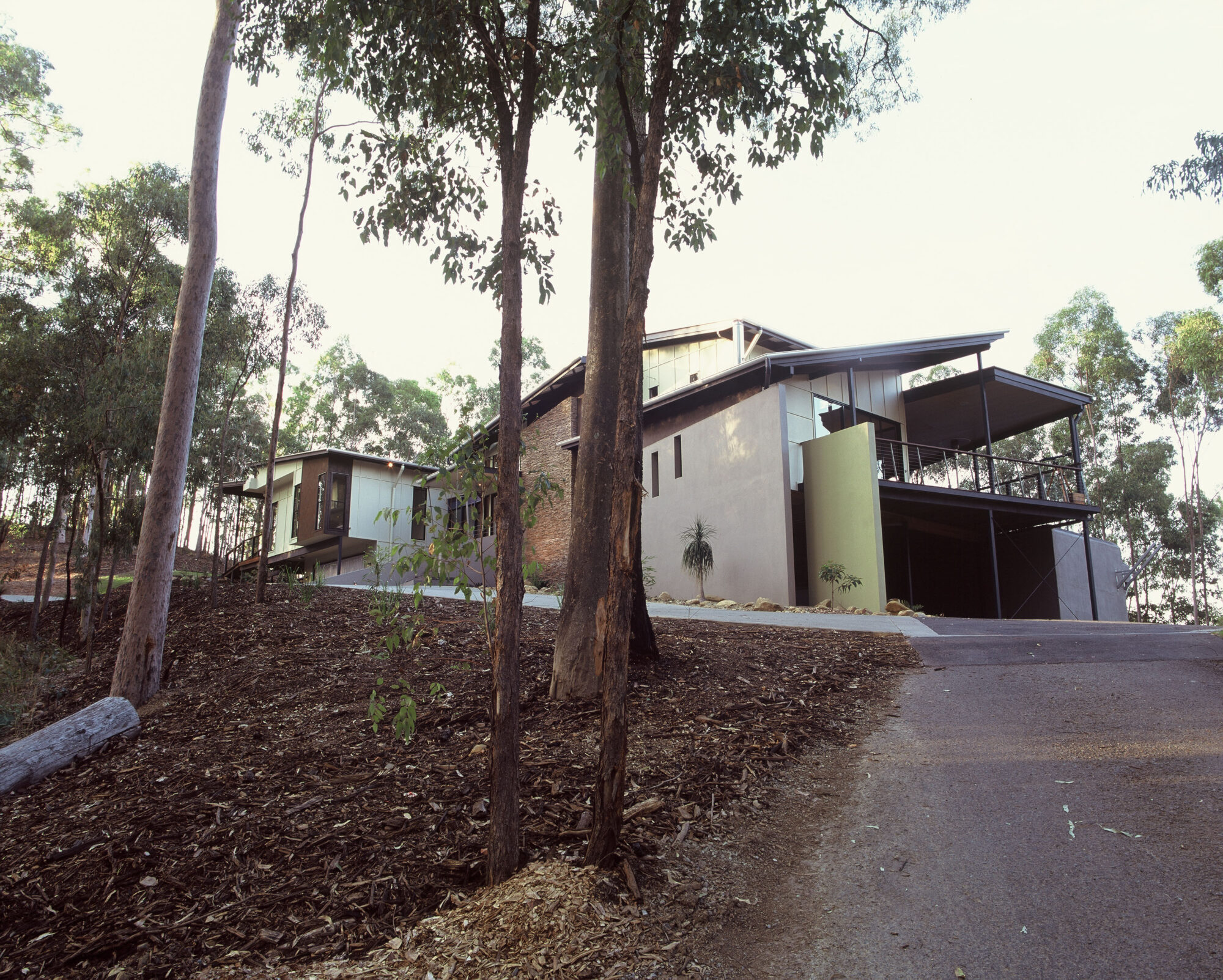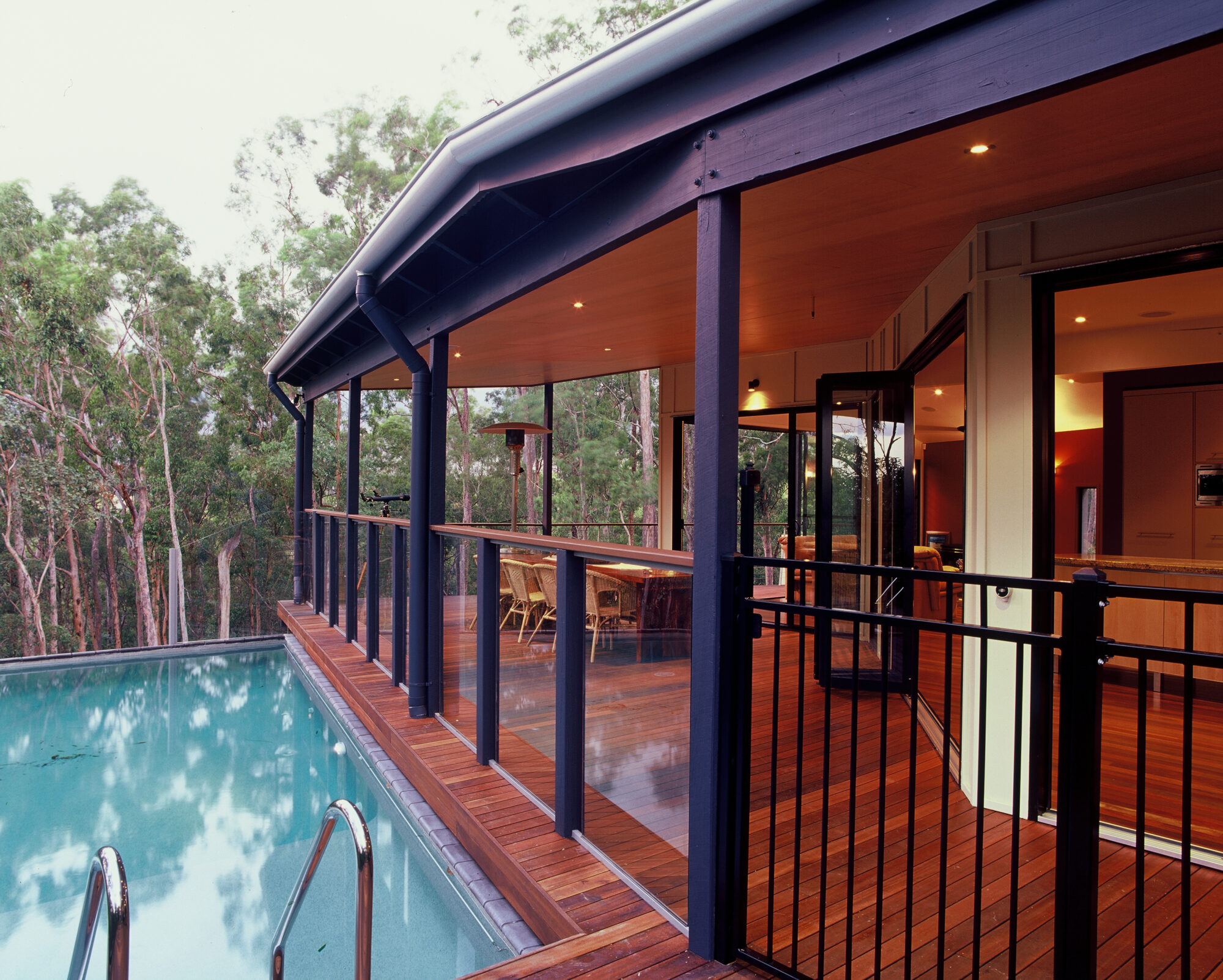
Individual Home at Toowong

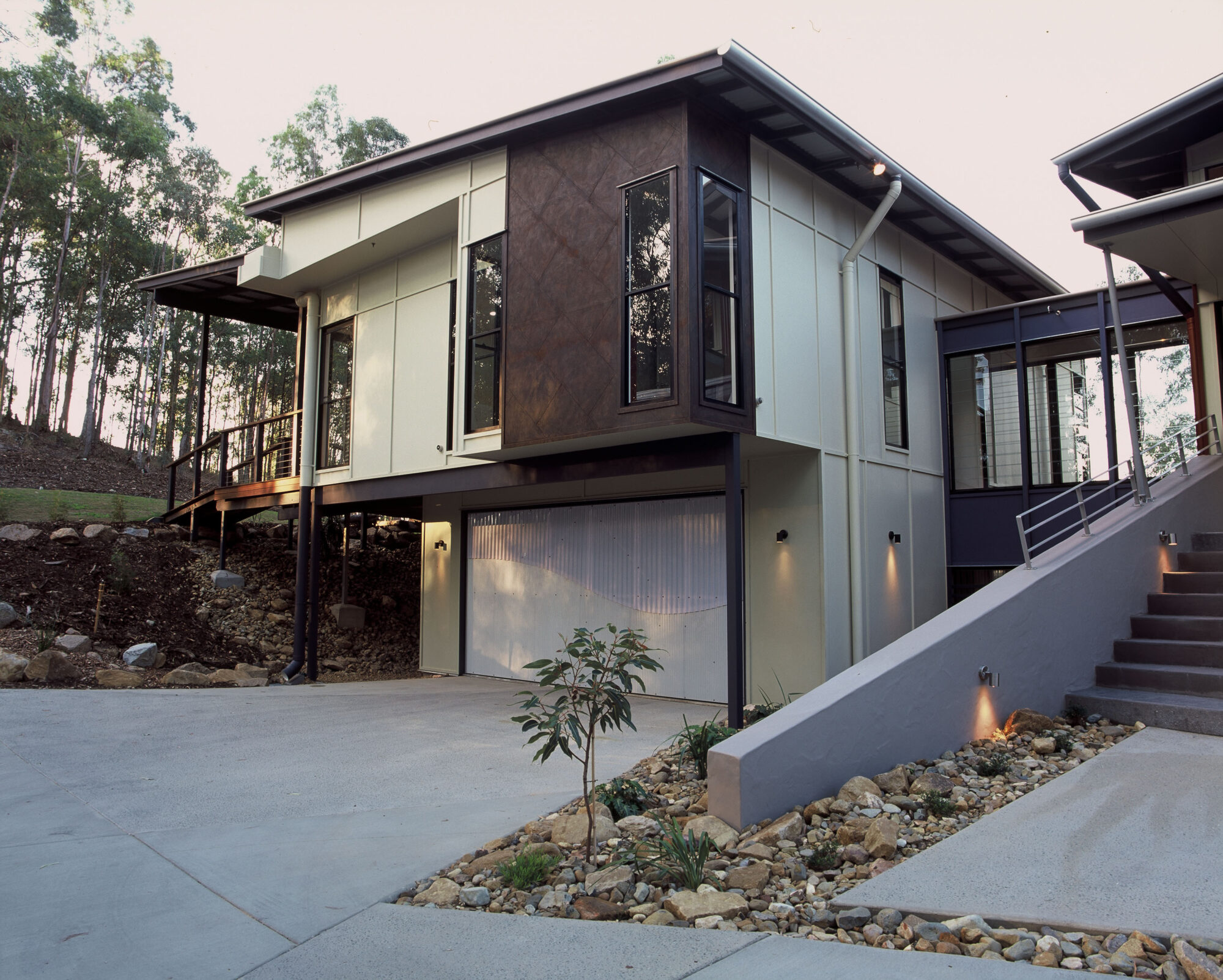
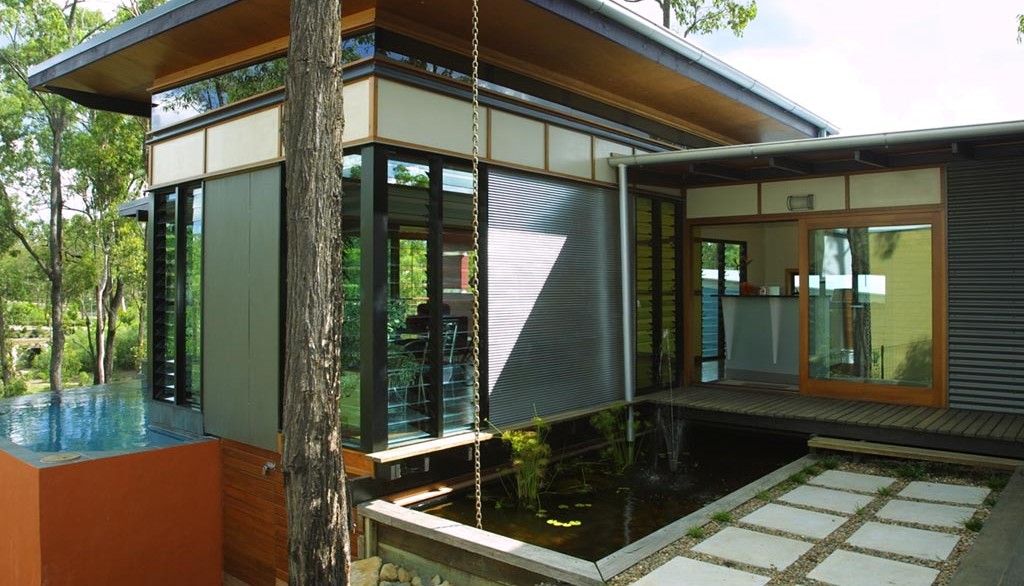
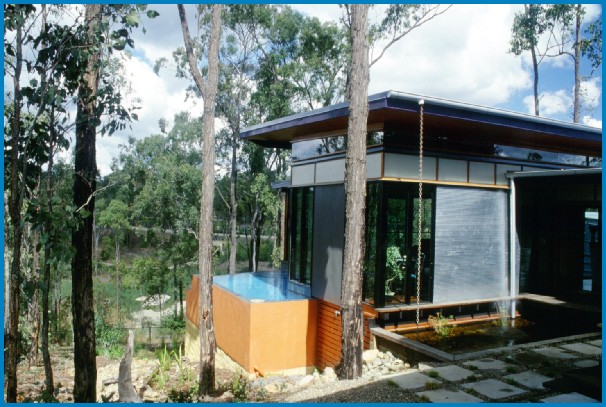
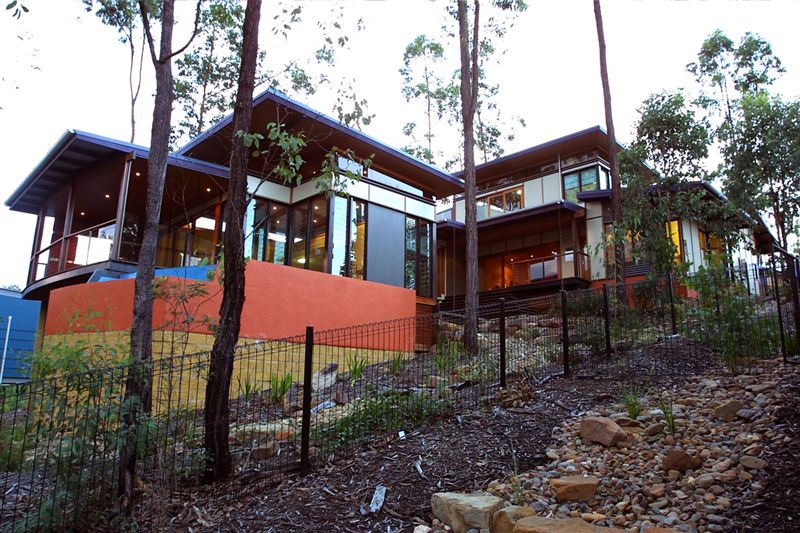
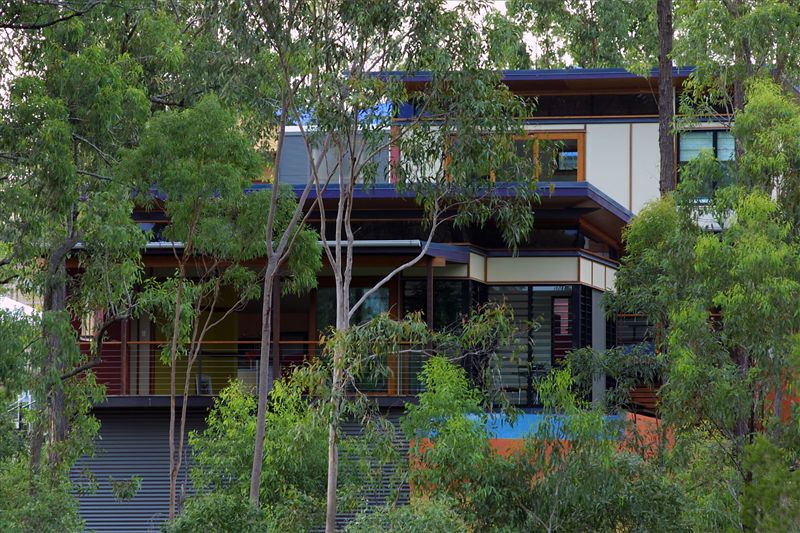
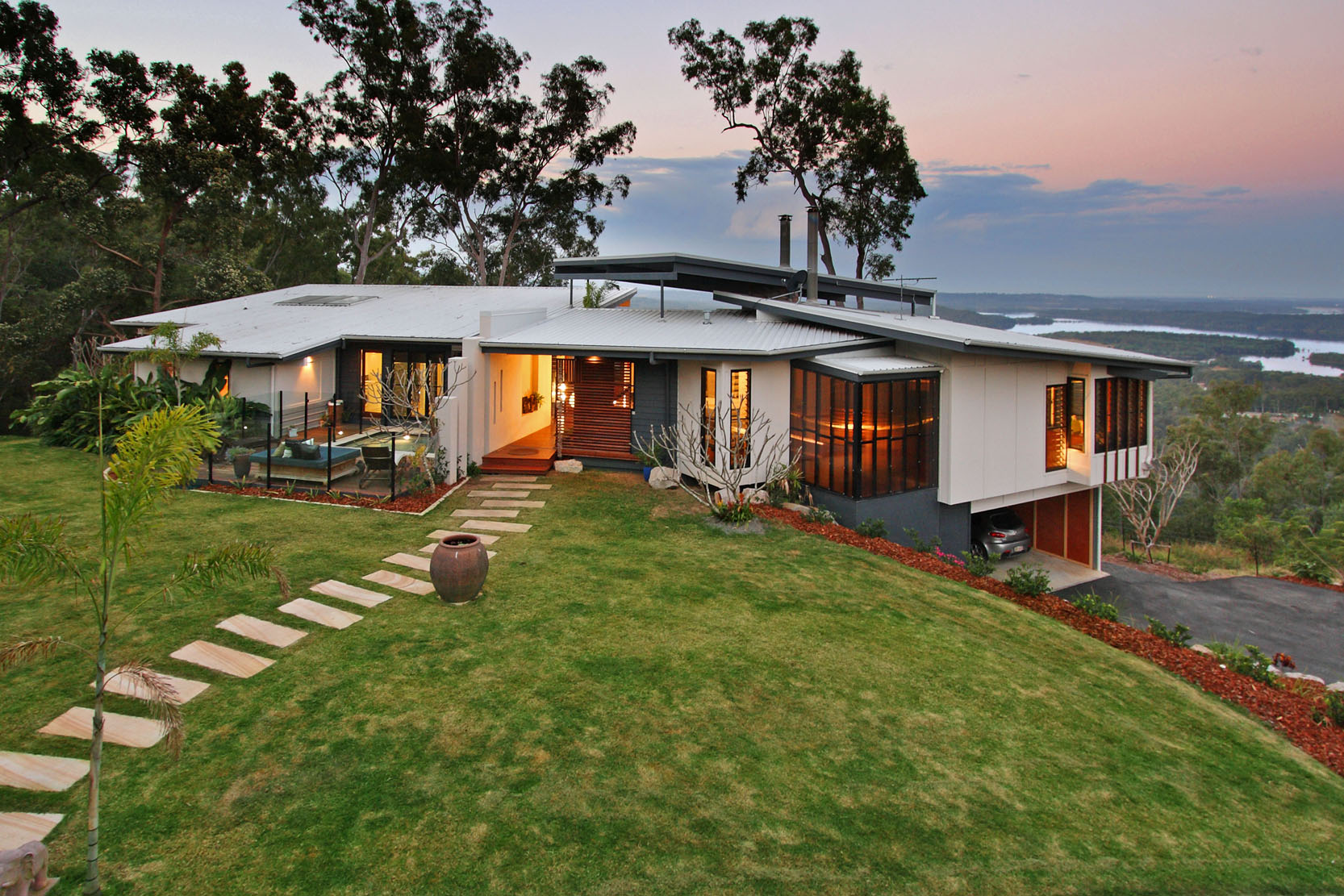
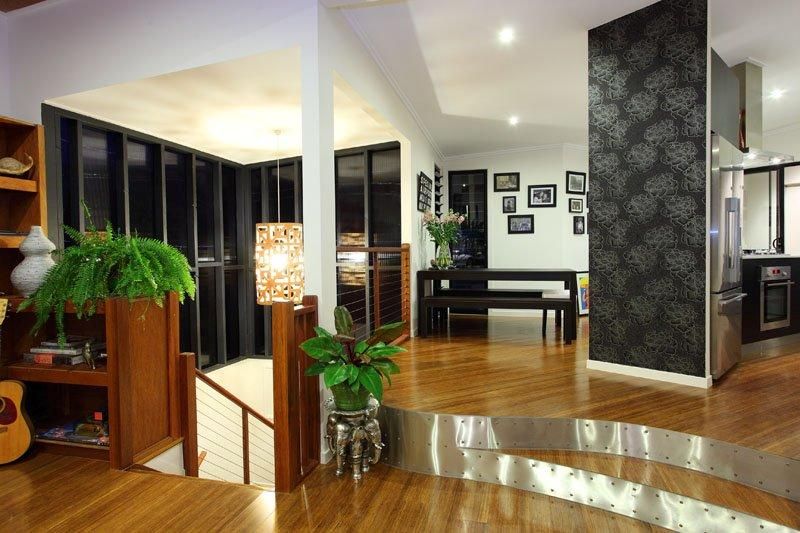
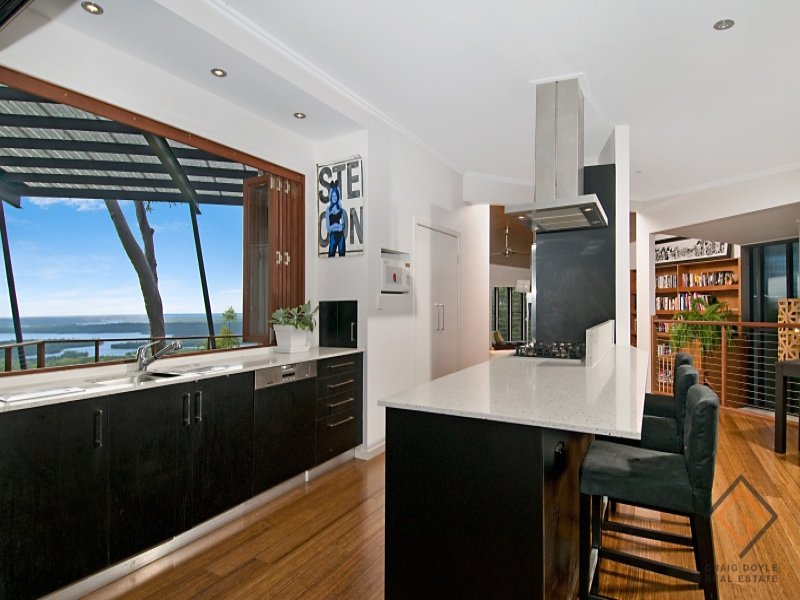
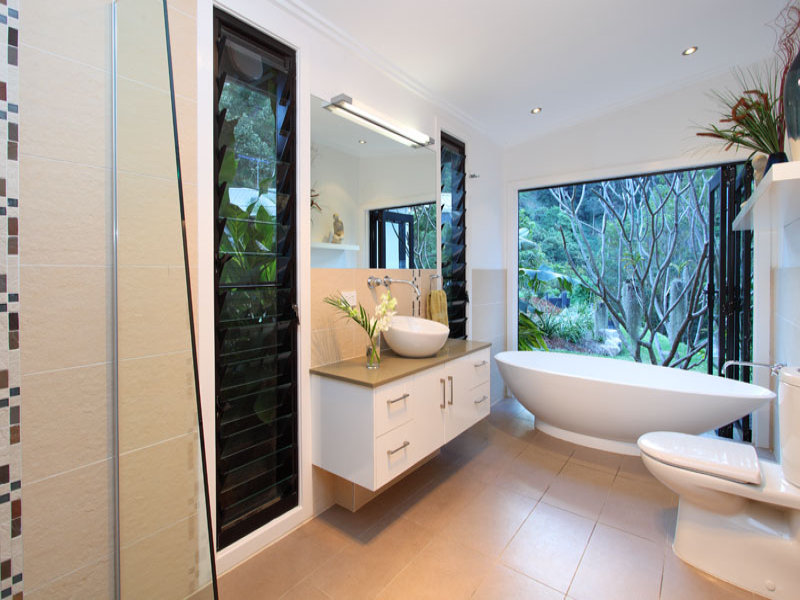
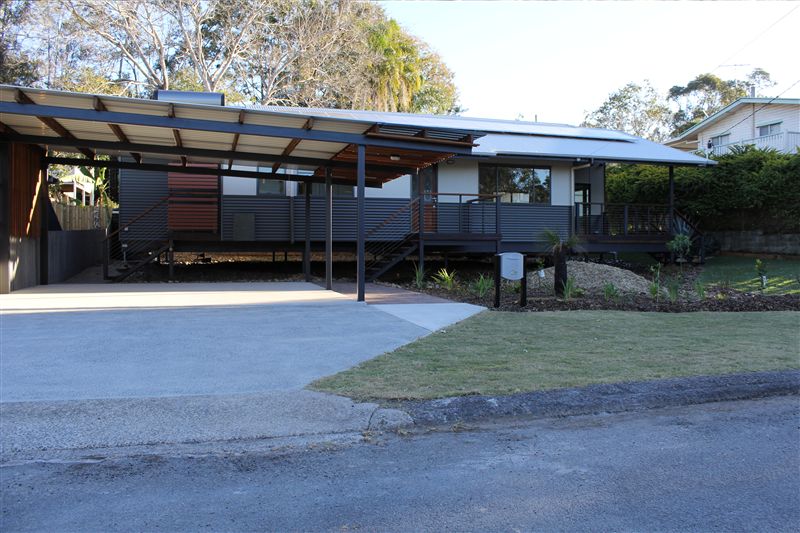
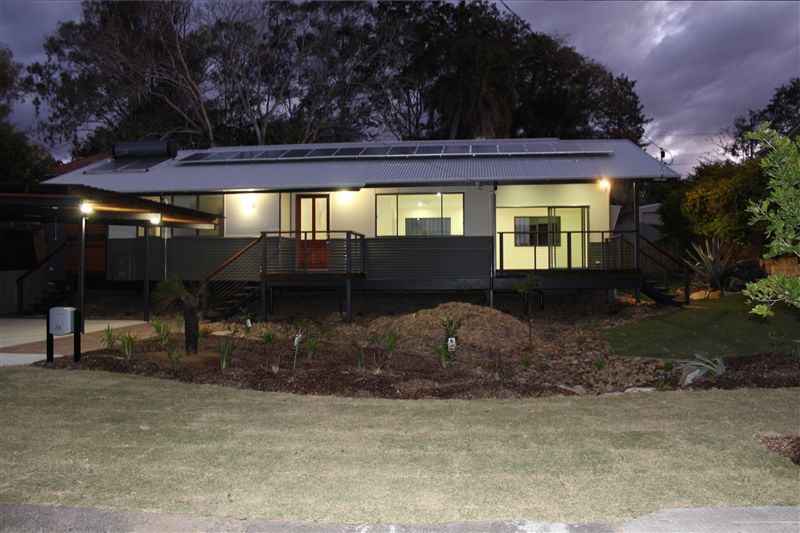
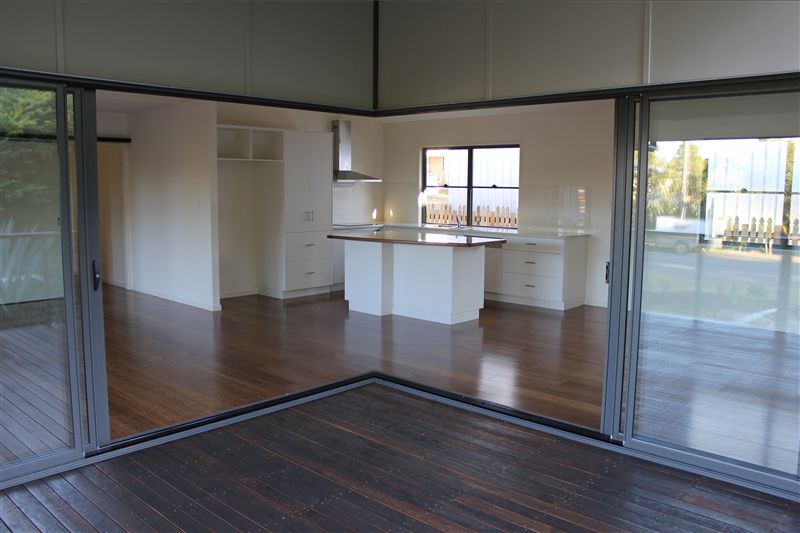
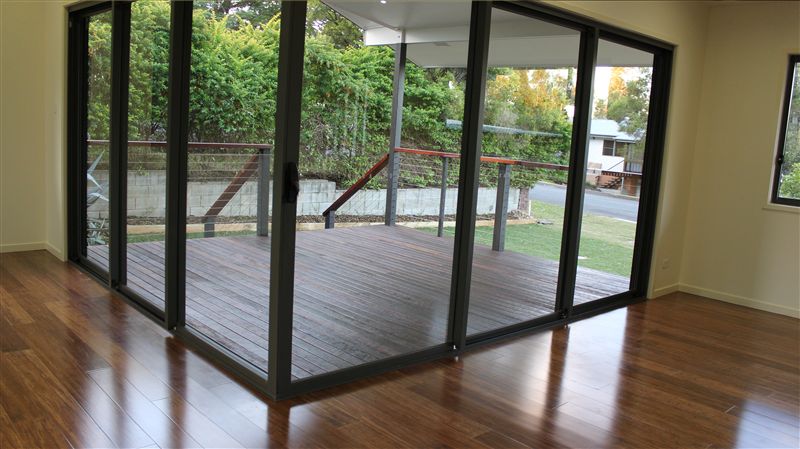
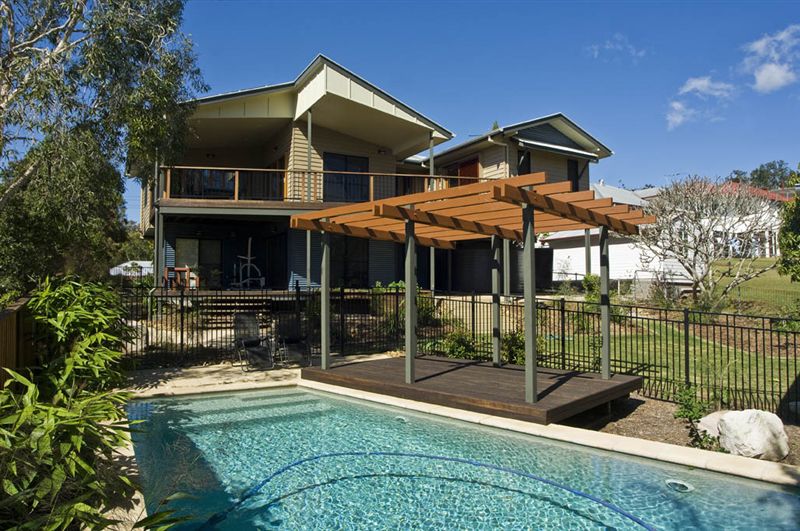
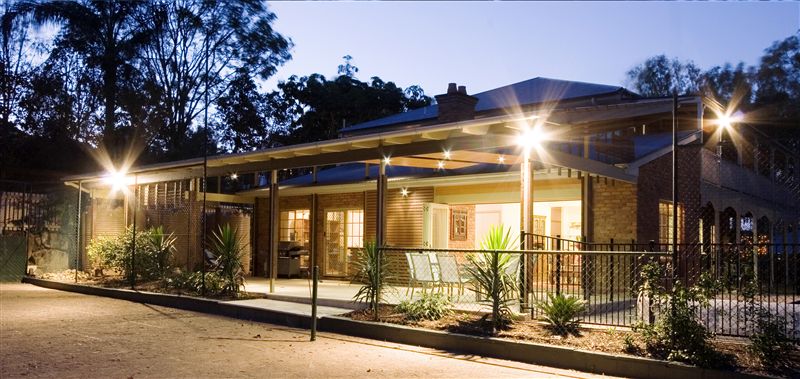
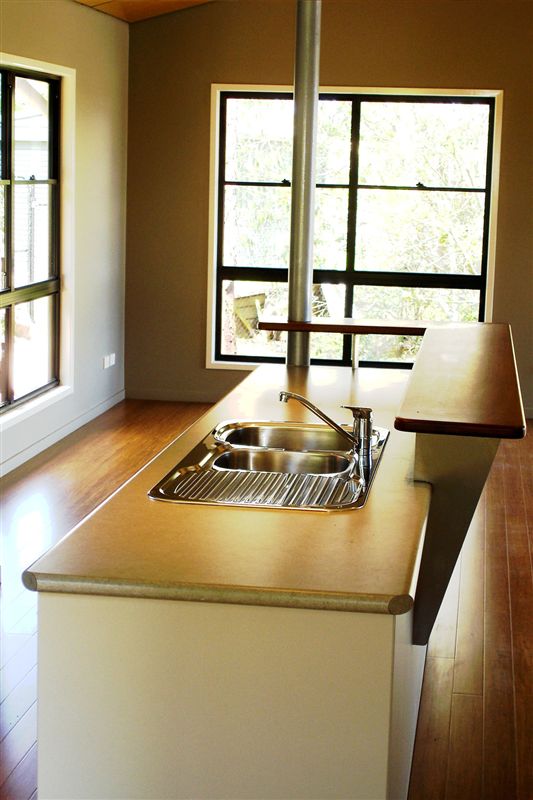
The client’s design brief was to create a low energy eco house designed for a sophisticated but simplistic lifestyle. The design inspiration was based on one’s original impression of the site: intrigue, relief and seclusion in a mature garden.

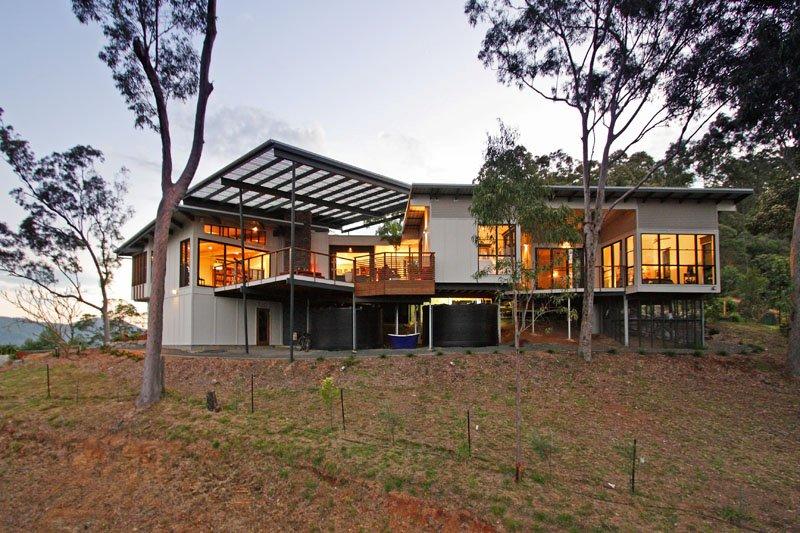
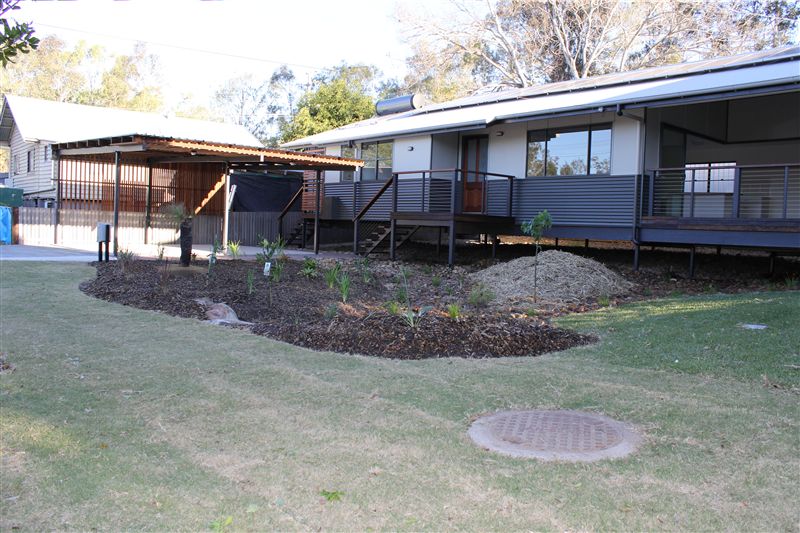
The house design captures that intrigue by way of a captivating roof structure, which delivers a sense of journey by a horizontal roof plate punching straight out of the front facade.

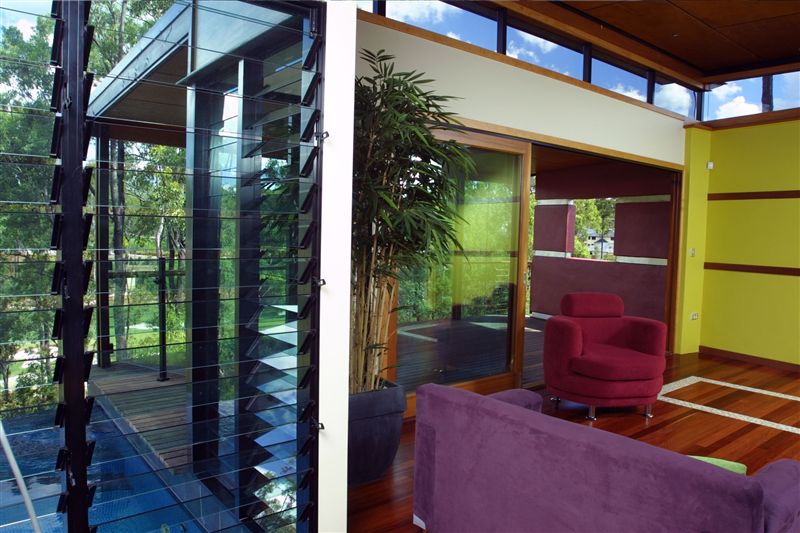
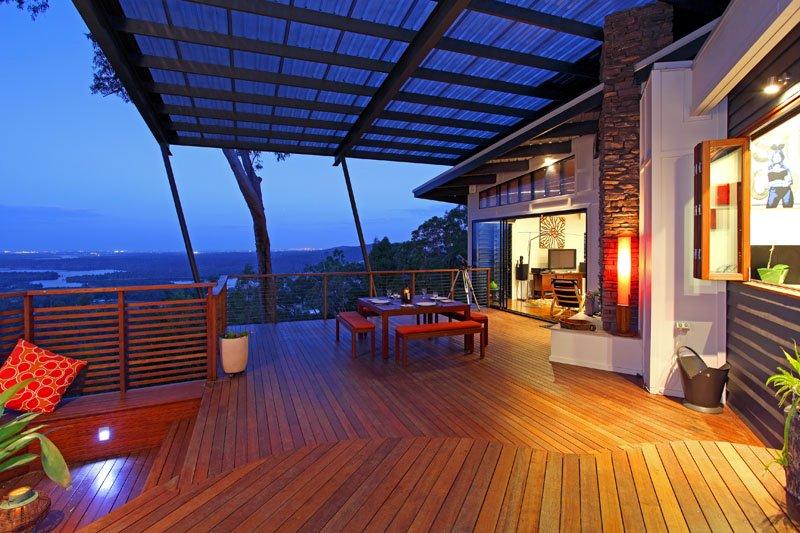
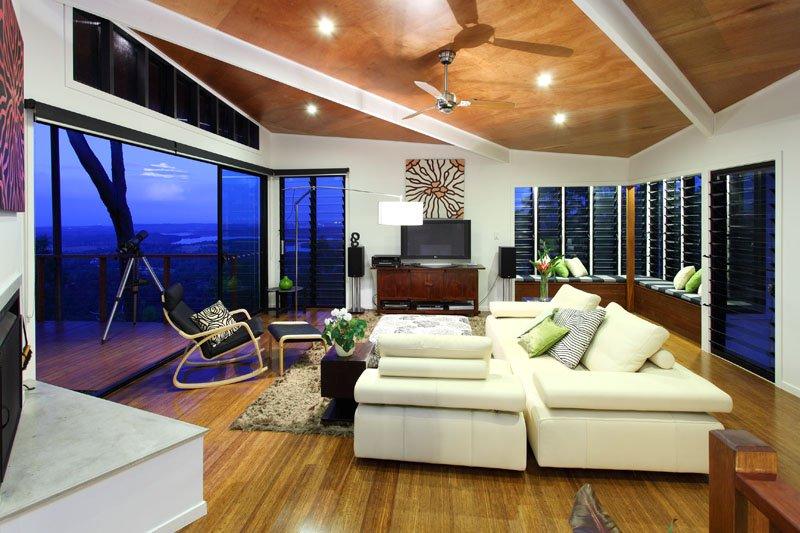
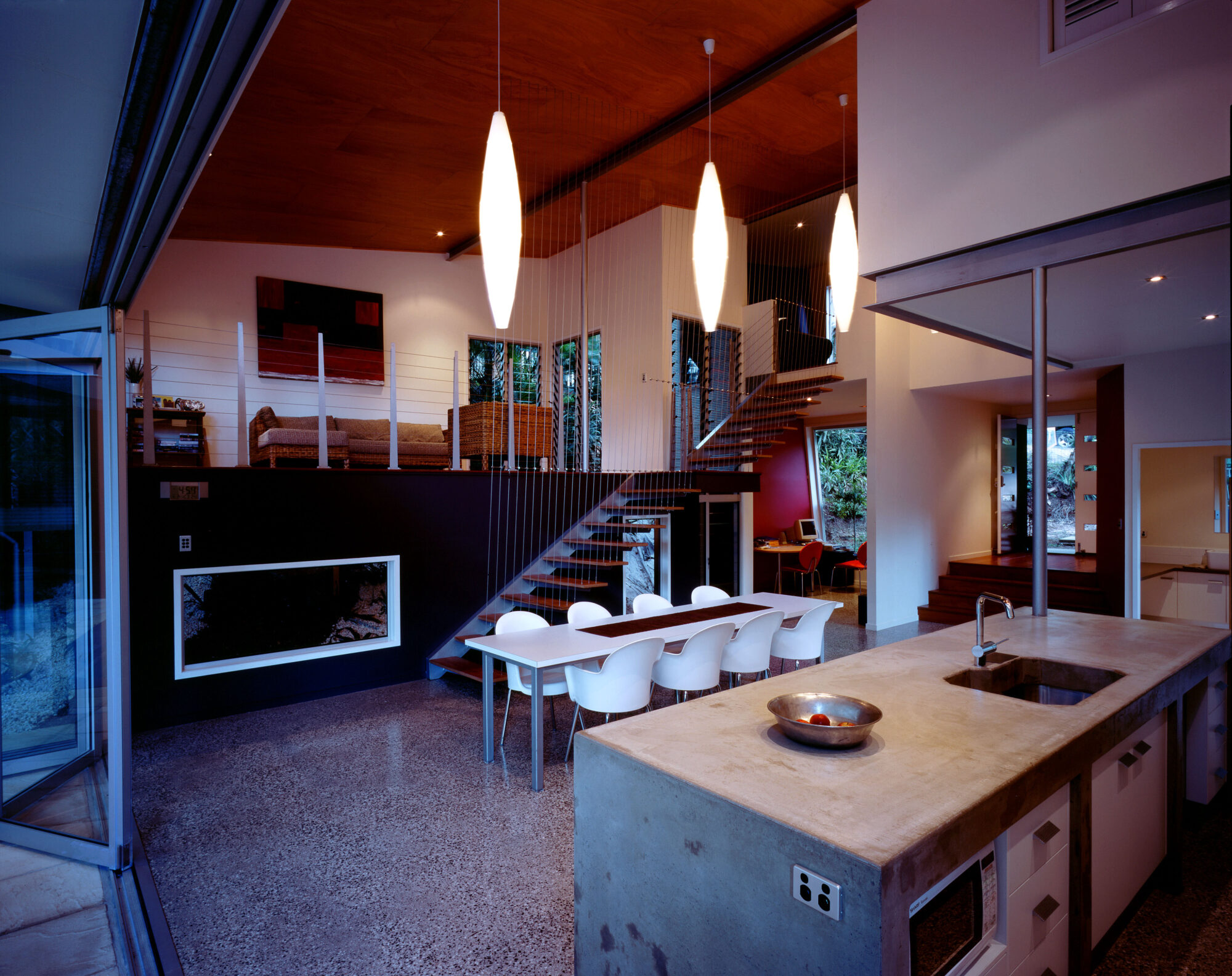
Inside the multi-level three bedroom home there is an overwhelming sense of volume, delivered by the unobstructed view throughout the home.

Suspended platforms hover in the refreshing but simple void space and highlight the alluring feel of the home.
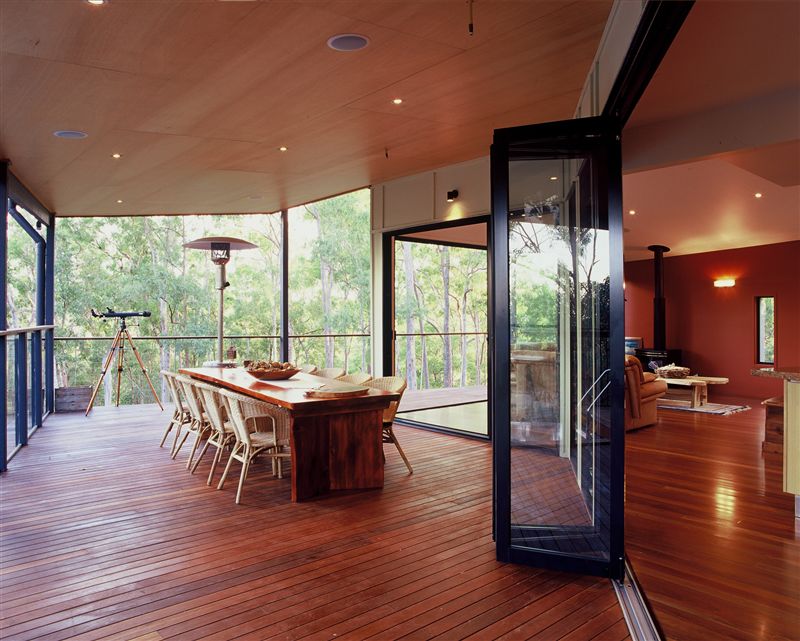
Sanctuary Magazine Issue 12 — Doing Your Block

Doing your block

Jane Canaway

Finally the builders have left, the painting’s done and even the carpets and furniture are in. But as the sun sets on your first day of new home-ownership, there’s an increasingly worrisome blot on your landscape – a so-called ‘garden’ full of nothing but clay and rocks.

Many new home owners find they are not only starting from scratch with no plants – some have been left with no topsoil, either.

“Most new developments have the topsoil scraped off before building starts,” explains Diane Cotter, who teaches sustainable design gardening.

“Most soils you buy now are scraped off a development somewhere then mixed with about 50% sand and have mushroom compost added. There is no glue or substance to it; nothing to hold it together.”

Ironically, the first thing a lot of new owners do is buy in topsoil, but while it may be easier to dig, few professional gardeners consider it better for plants.

“One site I worked on was a sloping block so they’d imported some topsoil to try and even it out,” Cotter recalls. “On the top end – the natural clay – everything grew really well, but on the lower side, which was filled with topsoil, if you felt the soil, it just ran through your fingers and everything struggled.”

Gardeners interested in growing native plants may find a scraped block is actually a bonus; dormant weed seed is removed – as is residual superphosphate, which favours weeds over wildflowers and is common on former farmland.

University of Melbourne researcher Paul Gibson-Roy has tried direct seeding native grassland species at a number of experimental plots across Victoria’s volcanic plains and achieved the best results on sites that had 5-15cm of topsoil removed first.

But for anyone wanting to grow exotics, lawn or vegetables, a rich, friable soil is best.

Cotter advises: “If you’re going to use topsoil then get one load first and mix it in, then a second load and mix it – otherwise you end up with layers that plants struggle with.

“It takes about 100 years to make an inch (2.5cm) of topsoil the natural way, and some of the stuff you buy is put together in one afternoon.”

In their defence, suppliers say quality topsoil can improve clays and sandy soils by adding organic matter. A spokesman from The Green Centre in Keilor, Victoria, said the company sells three qualities of topsoil: an economy version, comprising screened topsoil; a lawn mix with 25% compost added, and a premium blend that contains compost and cow manure. The centre also provides a recycling service by composting locally collected organic garden material.

But Sustainable Gardening Australia advocates against disturbing topsoil where possible, because it releases stored carbon back into the atmosphere, involves unnecessary transportation, can spread weeds, and disturbs the original composition of the soil.

Award-winning Melbourne landscaper Phil Johnson agrees: “You will never get better soil than what you get originally on your site.”

Johnson likes to work with the builder to make sure any soil that needs to be dug out or scraped off to put in footings is saved for later use.

“My goal is for nothing to leave the site,” he said.

Discussing a project on a very steep site, which he describes as “one of the most challenging sites for us”, he brought in extra topsoil to help even out some terracing, but the soil was from a neighbouring site and he essentially worked with the steep slope, rather than fighting it. [see attached pictures 6279 and 6245]

“Stormwater feeds into the top pond, which cascades down to the bottom billabong, and both are planted with indigenous aquatic species that help purify the water, create habitat and brings good indigenous seed to the area.

“Having water used in the landscape also creates habitat and has a cooling effect, as well as the aesthetics.”

His personal rule is to try and source all materials – rocks, mulches, decking and plant material – from within an 100km radius.

“Ideally, it’s best to consult with a landscape designer from day one to zone off and protect key trees. Also I like to design landscapes around the building so you are getting a functioning, sustainable design, and a seamless connection between the landscape and the building.”

Queensland-based company Sustainable Buildings has gone one step further to combine building and landscaping in one package.

Its landscaping manager, Tobias Volbert, believes that a holistic approach to the site – instead of planning a building first then garden as an afterthought – ensures a connectivity between the two.

“It avoids fragmentation,” he said. “It also means we can do any earthmoving in one go while the machinery is on site.

“We can better consider how the wind moves through the site and put in place an integrated water management plan by, say, using the water coming down the driveway to water the garden or putting water tanks under the building.”

With a master’s degree in Landscape Architecture from Hanover University, Germany, Volbert was intrigued by how some Australians view stormwater.

“Many people want to get it off site as soon as possible, then you see them coming out later with their hoses; we try to slow down the water flow to keep the water on the property for as long as possible because that makes so much more sense in drought environment.”

Dislike of the one-size-fits-all approach to building is a sentiment Volbert shares with garden designer Wendy Clarke.

“On a small slope they’ll just cut and fill without thinking about using the house afterwards,” an exasperated Clarke said. “The number of times I come across a house with a steep drive that’s impossible to get a pram up and cars are bottoming out.

“A slope is lovely to work with – it doesn’t have to be battled and contained.”

Clarke also advises builders and renovators to consider outdoor areas when planning doorways.

“You can end up with an area you don’t engage with because it’s not visible from the house, or an area of house you can look out on but can’t access.

“If you have a house that fits in with the block, you feel like your house is connected to the site rather than just stuck on it.”

STARTING FROM THE TOP

Even where the topsoil has been left, heavy machinery may have compacted it and any leftover cement, lime or mortar will have increased its alkalinity, so some soil first aid may be needed.

Test your soil first. Not only will you know what you are working with in the future but, by testing a patch near the house and another in an undisturbed area, you can gauge whether you need to correct its pH, too.

Acidity can be increased by adding compost or, for more instant or localized results, by adding iron chelates.

Garden lime can be used to increase alkalinity.

Thick clays can be made more friable by digging and watering in gypsum, which does not affect the pH.

After that, getting air and organic matter into the soil are the key goals. The easiest way is to dig in green mulch or compost.

Organic matter in the soil will:

  • Bind soil particles together, creating stability
  • Help the soil absorb plant nutrients such as calcium, magnesium and sodium
  • Significantly increase the soil’s water-holding capacity, especially in sandy soils.
  • Can increase the drainage of clay soils.

“It can be hard work and it takes time,” SGA-accredited designer Wendy Clarke says. “You have to keep digging in compost and mulch and waiting for the worms to come. Then you know you’ve got it right.”

Give Sustainable a call NOW on (07) 3201 1177 to talk to your highly awarded experts in sustainable home design and construction and start planning your new sustainable home today!

Individual Home at The Gap

The heavily vegetated block was previously home to a bush-walking track, which was used as the line for the original cut keeping the cut as minimal as possible on the site. The home has been designed to completely complement its bush setting, reflecting its relaxed and peaceful feel. After journeying up the driveway, the first vision of the home is breathtaking. The feature stonewall sets the ambience for the home – tranquil and working in harmony with its surroundings

Green Architecture

Flooded with natural light and ventilation, there is a large focus on the passive elements of the beautiful site and its form. A pool was created to play a major part in the passive ventilation of the home. Water storage has been incorporated underneath the pool, with separate rainwater tanks under the house for. This means that the residents do not have to rely on water supplies from local council, saving money on rates and allowing the house to utilise resources provided by the natural environment. The home also features a domestic sprinkler system, drawn from the pool, to fight any fires that enter the bush zone.
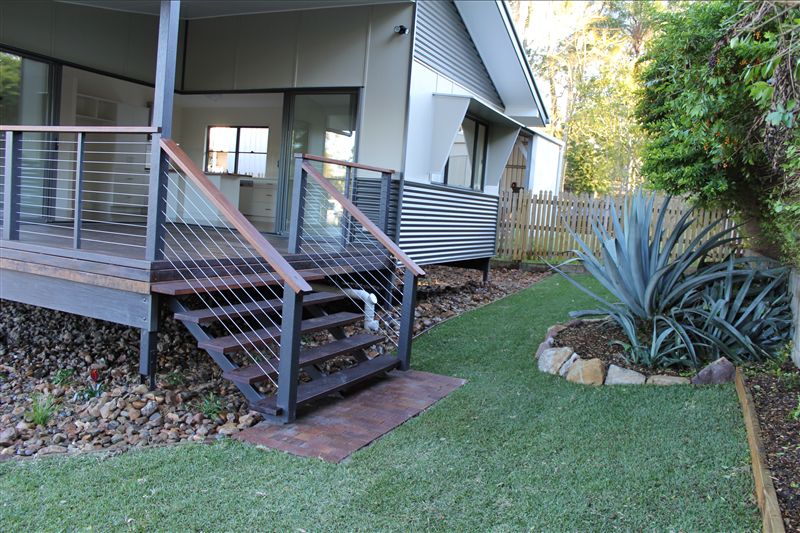
Individual Home at Brookwater

The Brookwater Design Studio features in the prestige Brookwater development which is located in Brisbane’s leafy western suburbs. Read below about one of the Sustainable Buildings in Brisbane.

The spectacular site is the inspiration for this striking Designer Home, with the dramatic slope of the terrain providing the basis for the innovative architectural Design. The site also offers passive solar and cooling elements and maximum use is made of these to enhance living conditions while making it economical and energy efficient home.
A key philosophy in developing this project was to always touch the earth lightly so as to disturb the least amount of soil in cut and fill. The Brookwater Design Studio reflects this by creating an important physical connection to the earth with a masonry blade wall running the length of the building, projecting out in a radius to fully capture the spectacular views and the magnificent nearby golf course.
Sustainable re-used the soil extracted from the foundations within the site to create the least possible disturbance to the surrounding environs.

The project was built with the belief that a home should be a monument of individualism, a place of refuge and also a solid family foundation. The Brookwater Design Studio reflects these beliefs by consisting of as few rooms as possible without becoming one large common room.

The Brookwater Design Studio’s colour schemes are inspired by the local native area and reflect the belief that colour inspiration derived from nature provides the most pleasing and timeless exteriors and interiors. This is one of the interesting factor of sustainable buildings.

The Brookwater Design Studio is Sustainable’s biggest award-winning development to date, see all awards here.

Individual Home Samsonvale Hilltop Retreat

This home is an excellent example of Sustainable Construction of house. The setting for this home is on a 40-acre rural property located in the Samford Valley which commands magnificent views of Brisbane, Lake Samsonvale, Moreton Bay, Moreton Island and beyond. The site has a level platform at the top of the hill accessed by a narrow road which meanders up through the heavily vegetated native forest that covers the steep banks leading to the house.

The Client’s intent was to build a unique house, located over an existing earth bank, nestled between the existing trees so it remained grounded to the site at the front. It then opened up to the views to the east with the platform floor of the house floating metres above the ground at the rear.

Sustainable Construction makes Homes closer to nature:

A split-level timber platform accommodates for the site contours as it stretches around the contour of the bank. The house is an integration of beauty, practicality, passive solar design and ventilation, resource efficiency and craftsmanship, remaining close to nature and in harmony with the surrounding environment. Full integration of the indoor and outdoor living spaces captures an understated lifestyle to suit the rural setting and maintains the feel of a traditional farmhouse.

An open plan layout, featuring extensive use of timber and glass, the house is designed to take full advantage of the spectacular views and the rural setting creating an inviting indoor/outdoor ambience. Construction of home that is close to nature makes a perfect Sustainable Home Design.

The house provides for flexible spaces with the ability to provide separate zones within the Design to enable efficient heating in the colder months. This enables all the rooms to be able to drag the views into the house with the pool having the ability to capture the view through a finned entry wall.

Spaces where to be minimalist and creation of privacy from the entry ensures that the house is slowly revealed as you move through it. Minimal number of steps throughout the house ensures easy access to all the rooms.

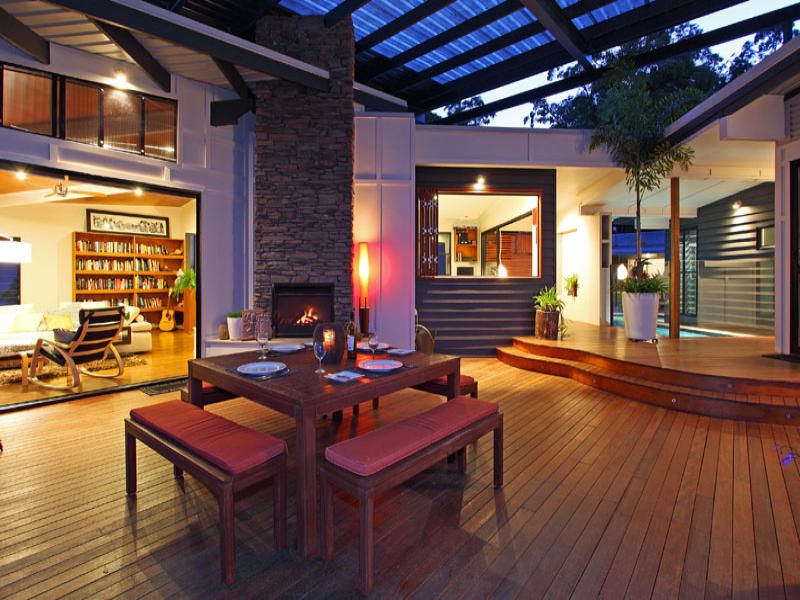
Although the house was to remain simple in form, the Design incorporated finishes and features that further enhance the living environment. Some of these features include plywood ceiling panels to the main living areas, a large working kitchen with stone tops. There is a large multi-levelled deck which becomes the heart of the house and captures the aspect over the lake to the bay accentuated by the sunken area for more intimate entertaining. An external fireplace creates the perfect outdoor room to enjoy Queensland’s magnificent climate, whilst the fireplace in the living room warms the internal rooms in the colder months. Window seats to the living room enable a view to the west and the mountains providing tranquil retreat areas for all to enjoy and steal away to.

An existing shed which is separated by the front lawn and the main entry, has been converted to a self-contained bungalow for additional seclusion. Two of the bedrooms have their own ensuites and are accessed along a breezeway to enhance the experience of movement throughout the house. The main bathroom has a sunken bath which is bordered by the pool which hugs the external wall.

Recipe House at Tivoli

The inspiration for this Recipe House comes from the need arising from the ever-increasing costs of affordable homes and most importantly energy efficient homes of high worth well into the future.

This house is 6 Star Rated, has a leading edge insulation system devised from 25 years experience with Sustainable construction and creates net positive solar power returned to the grid by approximately 250%.

It embraces sustainable homes solutions at the same time as demonstrating contemporary, leading edge design and hassle free living.

Some of the key features include:

– Three generous bedrooms
– Bathroom and ensuite
– Kitchen designed and supplied by renowned ‘Dana Kitchens’
– Two generous living areas which lead out onto a large, covered deck
– Passive/ cross ventilation systems
– Solar hot water
– An approximate 4kW Photovoltaic Solar System (ensures there are no electricity costs ever)
– Fully landscaped with climate specific and productive plantings
– Two undercover parking spaces

This architectually designed, energy efficient house has recently become available on the rental market.

Recipe House at Bardon

Bardon, a Brisbane suburb 7km from the city centre, is a neighbourhood consisting of mainly traditional Queenslander houses. This case study examines one Bardon residence, a new 310m² two storey house, developed on the 150m² footprint of a former post war brick house. The Bardon residence was one of the latest and more remarkable Sustainable Housing projects, with 98% of the materials recycled from the existing brick house.

The new Bardon residence was designed to use the natural conditions of the site while blending into the neighbourhood. Natural ventilation creates a comfortable and healthy indoor environment, and mature trees provide natural shading; windows, openings and indoor/outdoor areas are placed to ensure sufficient natural light and create transition spaces from inside to outside. Solar hot water system provides hot water and the solar PV electricity back to the grid.

Under normal circumstances when a house is demolished and a new one is constructed, the old materials are taken to landfill. It is estimated that the construction industry is accountable of 80% of landfill by weight and up to 44% by volume, when constructing, renovating and demolishing (Birkeland 2008, 64). The Bardon residence is proof that design and construction of a modern family house, Sustainable can reverse the waste process and use most old materials in an innovative way.

The increased focus on sustainable housing solutions and green architecture was important for the future and further development of these concepts. For both clients and architects it is necessary to work together with the counterparts in a greener direction. And in business terms sustainable construction today is still low in both supply and demand.

Initiatives and companies like Sustainable can be key stakeholders in reversing the process of waste and developing sustainable design trends. This case study focuses on the sustainability principles, their benefits and costs. The advantages and disadvantages for choosing these solutions will be examined.

Sustainability is not about sacrifices – it is about better planning and management as well as working with the environment, not against it.

Retrofit at Mount Ommaney

This ecologically orientated renovation project demonstrates the importance of setting environmental priorities and staging work over time to suit client needs and budgets. The Sustainable House Builders’ holistic ethos assisted with establishing these priorities and achieving significant environmental and social improvements.

The Client Brief: 

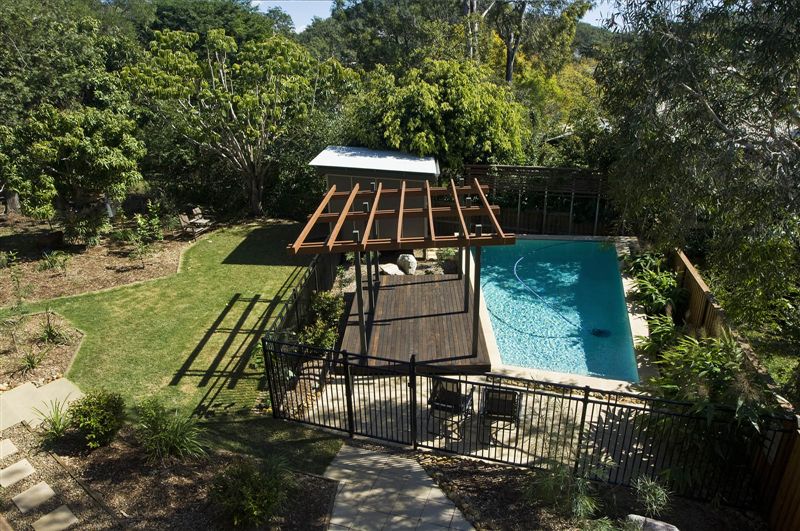
The existing four bedroom house was a deep plan, brick veneer building built in the 1980’s after the federation style. The house had some poorly located rooms in terms of solar aspect, which when combined with small eaves and limited ventilation openings required extensive use of air-conditioning to make the house habitable in the warmer months. The client had a rather vague brief; as well as some renovation work to the existing house. They were looking for some ideas to address a poorly utilised outdoor area with a south westerly aspect attached to the informal living area. The site was large, but despite featuring a pool and tennis court the outdoor areas were largely underused as there were no comfortable outdoor spaces nor connectivity for entertaining or for the children to play in.


DESIGN:

The design team recognised that the process of establishing the client brief was one of the most important phases of the project. They took a holistic approach that considered the family’s present and future needs and financial capabilities. Considering how best, a small renovation could improve the overall performance of the house. The result was a staged proposal. Stage one addressed the outdoor area with a large verandah extension adjacent to the house, some rainwater collection, and minor renovation of some of the upper level bedrooms. Stage two introduced a thermal chimney/ atrium into the centrally located stairwell which provides light and ventilation to the deep plan house, as well as the addition of more rainwater storage, a solar hot water system and insulation to the roof and walls. Stage three will see the implementation of permaculture gardens using greywater irrigation and a new ‘living wall’ to protect the upper level bedrooms from the western sun as well as to protect the bathroom and provide it with ventilation opportunities.

Construction materials: 

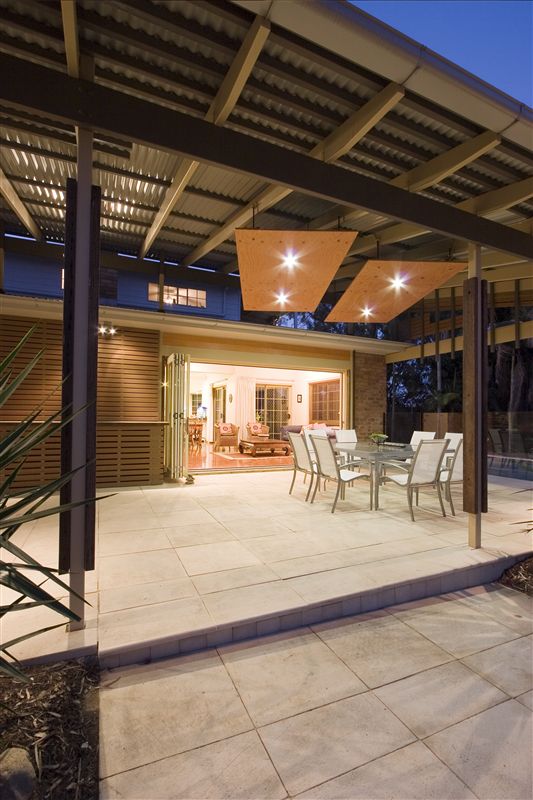
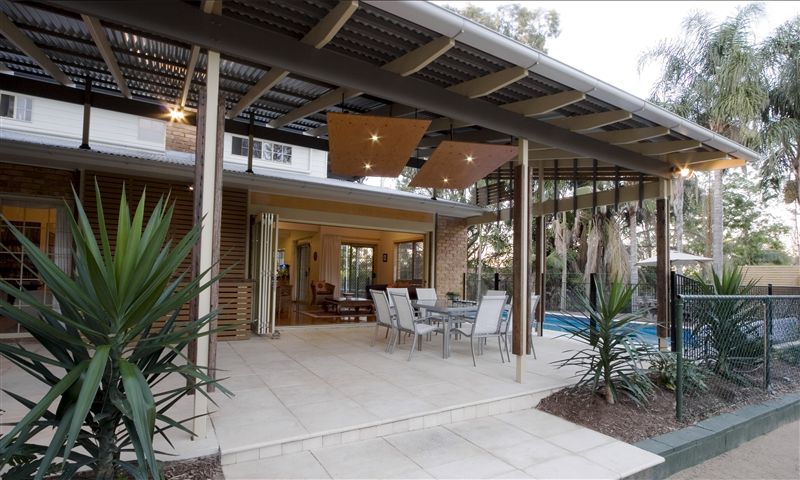
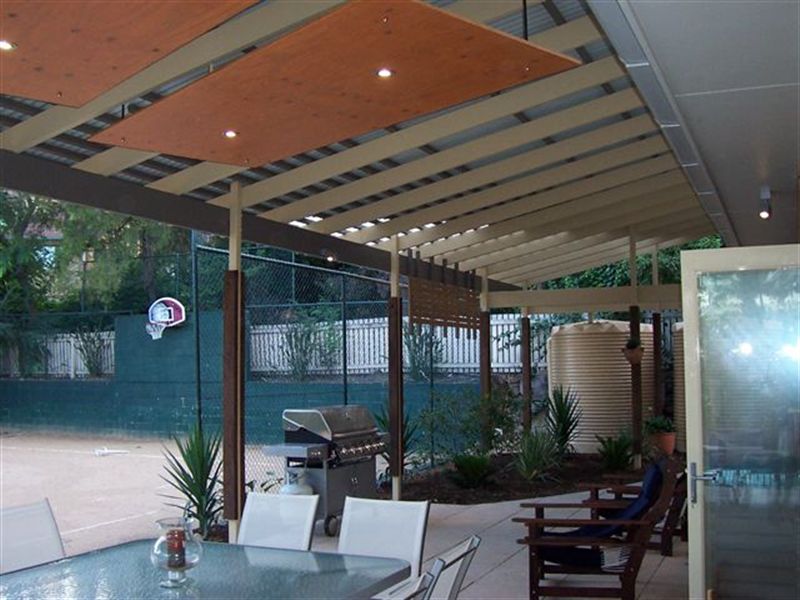
The pavilion-like pergola extension is predominantly constructed in a combination of steel, for primary structural elements,locally sourced recycled hardwood timber and laminated plantation pine beams. High level battens are completed in a proprietary composite material manufactured from recycled plastic and sawdust that is expected to require little or no maintenance. Drop-down plywood feature panels mark the location of the outdoor dining table and provide a ceiling to frame the space into which compact fluorescent lighting is recessed.

Shading: 

The existing house was poorly shaded to the south and west, with no significant vegetation and limited eaves overhangs. The extension provides protection to the family living areas which open out onto it from the harsh west sun. The pavilion roof provides upper level shelter whilst opening to the north allowing in desirable low oriented winter sun. Landscaping and ‘living walls’ have been used and proposed down the western side of the house to provide further protection. The north east of the house is protected by an existing verandah and some significant trees. The plywood drop panels have been positioned to the south-eastern side of the pavilion extension, to maximise winter morning sunlight. The mass shading provided to the house has also created a lot more visual privacy. As a result the house can be opened up and outdoor areas can be used without onlooking or overlooking neighbours.

Ventilation: 

The existing house featured French windows but was poorly ventilated. While there are plans in future stages to further address this, the stage one renovation made a huge difference by just opening up the back wall with a large bifold door. This has enabled air to be pulled and directed right through the house from all areas of the ground floor as well as forcing ventilation into the upper level circulation area. The effect is further enhanced by the sustainable home design of the verandah extension; the high edge of its roof sits over one metre above the existing house roof ensuring that hot air can be expelled. The second stage of work proposes a thermal chimney over the central stairwell. This will draw air from the open planned informal living areas on the ground floor.

Cooling Systems: 

The existing air-conditioning unit sits in the middle of the wall of the existing dwelling at the edge of the extension. Previously, not only did it have to cool an unprotected sizable area, subject to the full force of the western sun, with the unit itself was subject to that same western sun thus working very inefficiently. On the result of a cost analysis and availability of an alternative location, the unit has remained institute. Being now incorporated into a battened enclosure which screens both the unit and the associated pipe work. Acting now primarily as the main serving bench for the verandah entertaining space. The shading provided by the pavilion of the pool, allows maximum evaporative cooling whilst uncovered via the full opening of the bi-folding doors to the internal living spaces. Subsequently, since the addition of the pavilion extension by sustainable house builders, the residents have not found it necessary to turn the air-conditioning on, even during peak summer periods. The choice of floor material being masonry pavers, provides valuable thermal mass for cooling the home with summer shading, as well as providing passive heating of the adjacent living spaces by slow release of great winter sun solar gain. The rain water tanks provide substantial thermal mass properties also by shielding and cooling of the direct pavilion environment.

Lighting: 

A complete audit of the home’s lighting was conducted so that the house could be fitted with more energy efficient lighting layout. The introduction of the daylight into the centre of the deep plan house through the proposed thermal chimney/atrium will reduce if not eliminate the need for artificial lighting during the day. The inspiration of this passive lighting benefits not only the central circulation areas but most importantly flooding the upper level of the home with priceless energy neutral light and ventilation. Artificial lighting for the extension is all from 240v compact fluorescent globes and provides alternative lighting for the tennis court that reduces the need for the power thirsty court lights when the area is being used for general play by the children.

Rainwater: 

Three rainwater tanks with a total capacity of approx. 15,000 litres total have been installed as part of stage one. They are located to the west of the outdoor space helping to buffer the afternoon sun. The tanks were plumbed to the house ready to be connected to all services inside the house as part of a later stage of works. At the moment the collected rain water is being used for wash down, irrigation purposes and for pool top up. There was also another tank installed towards the other end of the property next to the garage structure, this bringing the total rainwater storage capacity of the site to approx. 28,500 litres. A pool blanket was installed to reduce evaporation, provide solar heating and reduce heat loss whilst minimising fossil fuel energy use for sanitising the water.

Landscape: 

One of the main features of this renovation was the integration of the landscape into the design. The colorbond roof cladding of the verandah, has been phased in the southwest corner with polycarbonate sheeting, buffering harsh summer sun as natural filtered light through random under battens. A pleasing feature allowing the garden to thrive as it extends well beneath the protection of the roofline. Tensioned steel cables, ladder from the landscape to the roof structure allowing for vines to climb into the structure itself. The intent is to act as a living, active, cooling corner within the outdoor space, serving to filter and cool breezes for both direct external and internal air quality and temperature. Garden beds to the extended edge of the extension assist in filtering out the dust which filters off the crushed granite tennis court. As part of stage three a deciduous vine will be incorporated into a ‘living green wall’ which will protect the children’s rumpus room minimizing artificial lighting by shedding it foliage to allow in desirable winter sun. There has been a focus on productive gardens and where possible vines and edible plants have been chosen. The vines as part of stage one are passionfruit and the intention is to provide a raised vegetable garden down the side of the house as part of stage three.


EVALUATION:

The principle focus of the sustainable home designs team on passive design, incorporating total integration of landscape, achieved through microclimate control, has greatly improved occupant comfort whilst achieving a massive reduction in the use of fossil fuel sourced energy. Water harvesting and water conservation strategies enable maintenance of the thirsty pool for summer comfort refuge whilst providing the potential to meet new stringent water usage targets. The social connectivity and interaction inspired by natural and passive elements of the pavilion structure has undoubtedly improved the comfort, health and quality of family life.

Recipe Housing at Brassall

The Brassall Green Home sits on a suburban allotment providing views to the distant hills and beyond to the southeast. One major constraint of the site was the stormwater overland path running through the middle of the property down to the street. An additional controlling factor encountered in the design process was the need to maintain as many of the existing trees as possible.

The green home has been splayed in form to ensure the eucalyptus trees were retained adjacent to the house, while still providing the internal spaces to gain maximum exposure to the beautiful aspect.

The large slope across the site focus due of the design was to bridge the house over the watercourse and provide landscaped ponds beside the new driveway. During heavy rain storms a natural creek flows over the site from the rear, under the house and then down along side the driveway to the stormwater pipe work system.

Living areas were placed to capture the magnificent views achieved from siting the house to the rear of the property to gain the maximum elevation. Open plan living allows the house to breathe and the orientation of the rooms captures the summer breezes to naturally cool the house.

The two decks enable the extension of living to the outside from the living and family rooms on different levels, whilst providing separation or retreat areas for the residents.

Arrival to the green home(also known as eco house) is up the textured coloured concrete driveway which leads to the carport. From this point a landscaped walk way leads to a timber bridge over the dry creek bed gully leading to the front door of the house.

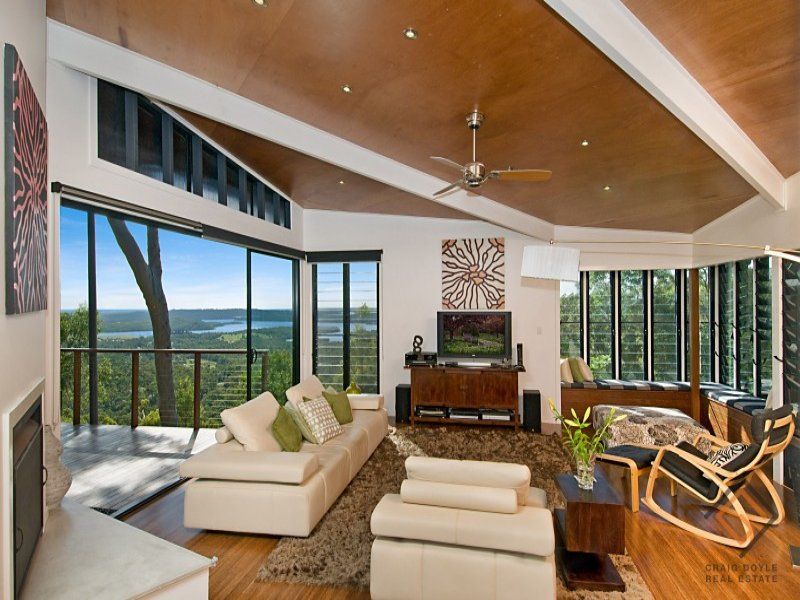
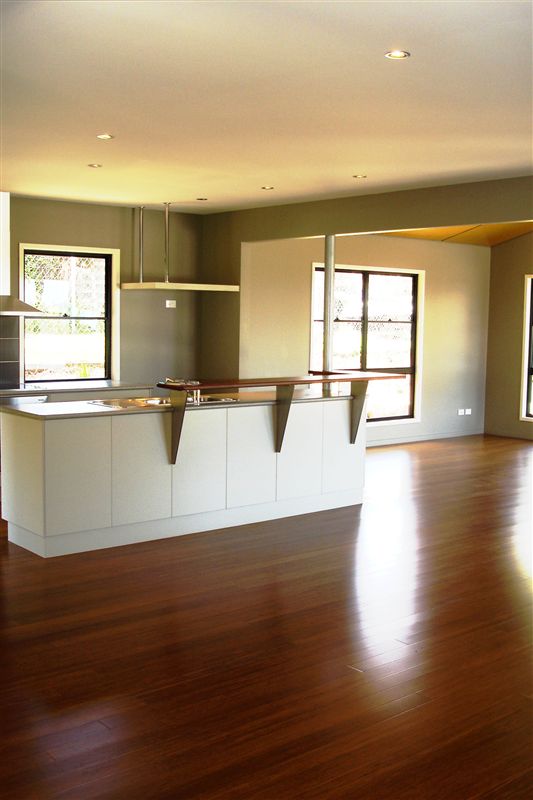
Internally the house features plywood raked ceilings in the main living area and the bamboo flooring provides natural textures and colours complementing the existing trees. This use of timber and natural woods allows the house to be integrated into the landscape.

The split levels of the house enable the lightweight platform form to relate to the site levels and provide additional interest to the flow of the internal spaces. The stairwell at the entry became a structural timber element rather than just a circulation route. The main bedroom is located over the main living area in a separate pod to the other bedrooms and family room which is linked by the bridge stairway over the natural gully.

Growing more Sustainable Communities (June 24, 2013)

Much has been achieved over the last two decades to improve the environmental performance of buildings and infrastructure, but it is still early days in our understanding of how we can shape more sustainable builders communities within the built environment.

Visit our Sustainable Communities page to learn more.

Phone: (07) 3201 1177